
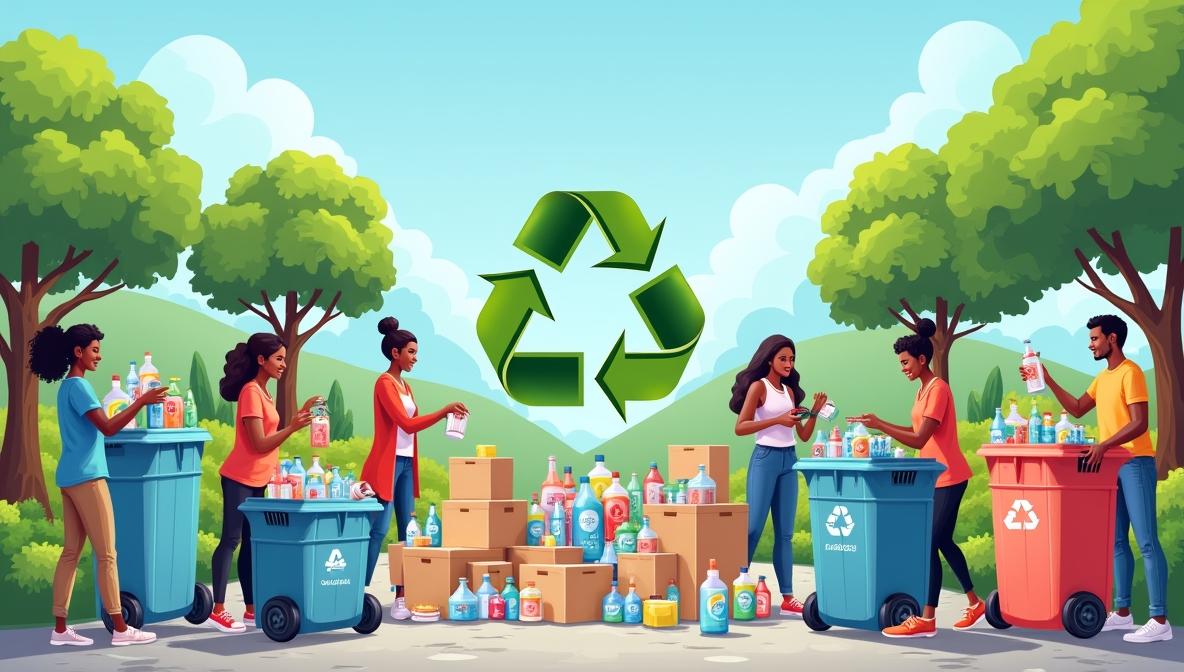
Sustainable Disposal and Recycling of Cleaning Products and Their Packaging
Cleaning products play an essential role in maintaining hygiene and creating healthy living environments. However, once a bottle of detergent, disinfectant, glass cleaner, or bathroom cleaner is empty, many consumers are unsure how to dispose of the remaining product, the packaging, and the various components attached to it. Improper disposal can contribute to environmental pollution, contaminate water systems, and increase the amount of waste sent to landfills. Understanding how to correctly handle cleaning product packaging is an important step toward a more sustainable household.
Why Proper Disposal Matters
Many cleaning products contain chemical ingredients designed to remove dirt, grease, bacteria, and stains. While these products are generally safe when used according to instructions, leftover chemicals can become problematic if they are poured into unsuitable locations or discarded carelessly. Packaging materials, including plastic bottles, spray mechanisms, caps, labels, and cardboard boxes, also represent valuable resources that can often be recycled when handled correctly.
The challenge is that cleaning product packaging is often multi-component and multi-material. A single container may include a plastic bottle, a colored label, an adhesive layer, a spray trigger, a metal spring, and a protective cap. Each element may require a different disposal method depending on local recycling capabilities.
Understanding Cleaning Product Packaging
Modern cleaning product manufacturers use a variety of packaging materials. High-density polyethylene (HDPE) and polyethylene terephthalate (PET) are among the most common plastics used for bottles. These materials are frequently accepted by municipal recycling programs because they can be processed and transformed into new products.
Labels add another layer of complexity. Some labels are made from paper, while others are made from plastic films that may not separate easily during recycling. Adhesives used to attach labels can also influence recycling efficiency. In many modern recycling facilities, labels do not need to be removed manually because sorting and washing processes handle them automatically. However, consumers should always check local recycling guidelines.
Spray bottles present an additional challenge. The trigger mechanism often contains several materials combined into a single component, including plastic, metal springs, rubber seals, and small tubes. Because of this mixed composition, spray heads are sometimes excluded from standard curbside recycling programs.
Handling Leftover Cleaning Products
Before recycling any container, it is important to ensure that the product inside has been fully used. If a small amount remains, consumers should follow the disposal instructions printed on the product label. Manufacturers often provide guidance for safe disposal based on the chemical composition of the cleaner.
Products that are classified as hazardous should never be poured onto soil, into storm drains, or into natural waterways. Many communities organize household hazardous waste collection events where such materials can be disposed of safely. These programs help prevent harmful substances from entering ecosystems and damaging aquatic life.
Whenever possible, purchasing only the quantity needed and selecting concentrated refill systems can reduce waste generation from the beginning.
Preparing Containers for Recycling
Proper preparation significantly improves the chances that a container will be successfully recycled. Empty bottles should be drained completely. In most cases, a quick rinse is sufficient to remove product residue. Excessive washing is generally unnecessary and may waste water.
Caps should be handled according to local recycling rules. Some municipalities prefer caps to remain attached to bottles, while others require them to be removed. Checking local requirements ensures that recyclable materials are processed efficiently.
Flattening containers when appropriate can help save space during transportation and collection. However, rigid bottles should not be crushed if local sorting equipment relies on shape recognition for identification.
The Role of Labels and Multi-Layer Packaging
Labels often raise questions among environmentally conscious consumers. While removing labels may seem beneficial, modern recycling facilities are increasingly designed to manage them automatically. Problems arise primarily with multi-layer packaging systems where several materials are permanently bonded together.
Multi-layer packaging can include combinations of plastic films, aluminum barriers, and adhesive layers. These structures are effective for protecting products but are significantly more difficult to recycle. As sustainability becomes a greater priority, manufacturers are investing in mono-material packaging solutions that simplify recycling and improve material recovery rates.
Consumers can support these efforts by choosing products that clearly communicate their recyclability and use packaging designed for circular economy systems.
Refillable and Reusable Alternatives
One of the most effective ways to reduce packaging waste is to embrace refillable cleaning systems. Many companies now offer concentrated cleaning solutions that can be diluted at home using reusable spray bottles. This approach dramatically reduces the amount of plastic required for transportation and packaging.
Reusable containers can remain in service for years, minimizing resource consumption and lowering environmental impact. Some retailers have even introduced refill stations where customers can replenish cleaning products directly into existing containers.
Such systems not only reduce waste but also encourage greater awareness of household consumption patterns.
Supporting a Circular Economy
The concept of a circular economy focuses on keeping materials in use for as long as possible. Rather than treating packaging as disposable waste, circular systems view materials as resources that can be recovered, recycled, and reintroduced into manufacturing processes.
Consumers play a critical role in this cycle. By purchasing products with recyclable packaging, following disposal instructions carefully, participating in local recycling programs, and supporting companies that prioritize sustainable design, individuals contribute to reducing environmental pressure and conserving natural resources.
Conclusion
Proper disposal and recycling of cleaning products and their packaging require attention to both the contents and the container itself. Bottles, caps, labels, spray mechanisms, and multi-material components may each have different recycling pathways. Understanding these differences helps prevent contamination, improves recycling efficiency, and supports broader sustainability goals. As manufacturers continue to develop more environmentally friendly packaging solutions and consumers become more informed about responsible disposal practices, the environmental footprint of household cleaning can be significantly reduced. Every correctly recycled bottle and every thoughtfully chosen refill system represents a small but meaningful step toward a cleaner and more sustainable future.