
How to Spot Greenwashing in Cleaning Products — Labels, Certifications & Smart Consumer Choices
The demand for eco-friendly cleaning products has grown dramatically over the past decade. As more households aim to reduce chemical exposure and environmental impact, manufacturers have responded with a wave of “green,” “natural,” and “eco-safe” labels. But not all environmentally marketed products are truly sustainable. Some rely on greenwashing — a marketing strategy that makes products appear more environmentally responsible than they actually are.
Understanding how to evaluate cleaning products critically can help consumers avoid misleading claims and make genuinely sustainable choices.
What Is Greenwashing?
Greenwashing occurs when companies exaggerate or falsely advertise environmental benefits to attract eco-conscious consumers. It can involve vague wording, irrelevant claims, misleading imagery, or selective disclosure of information.
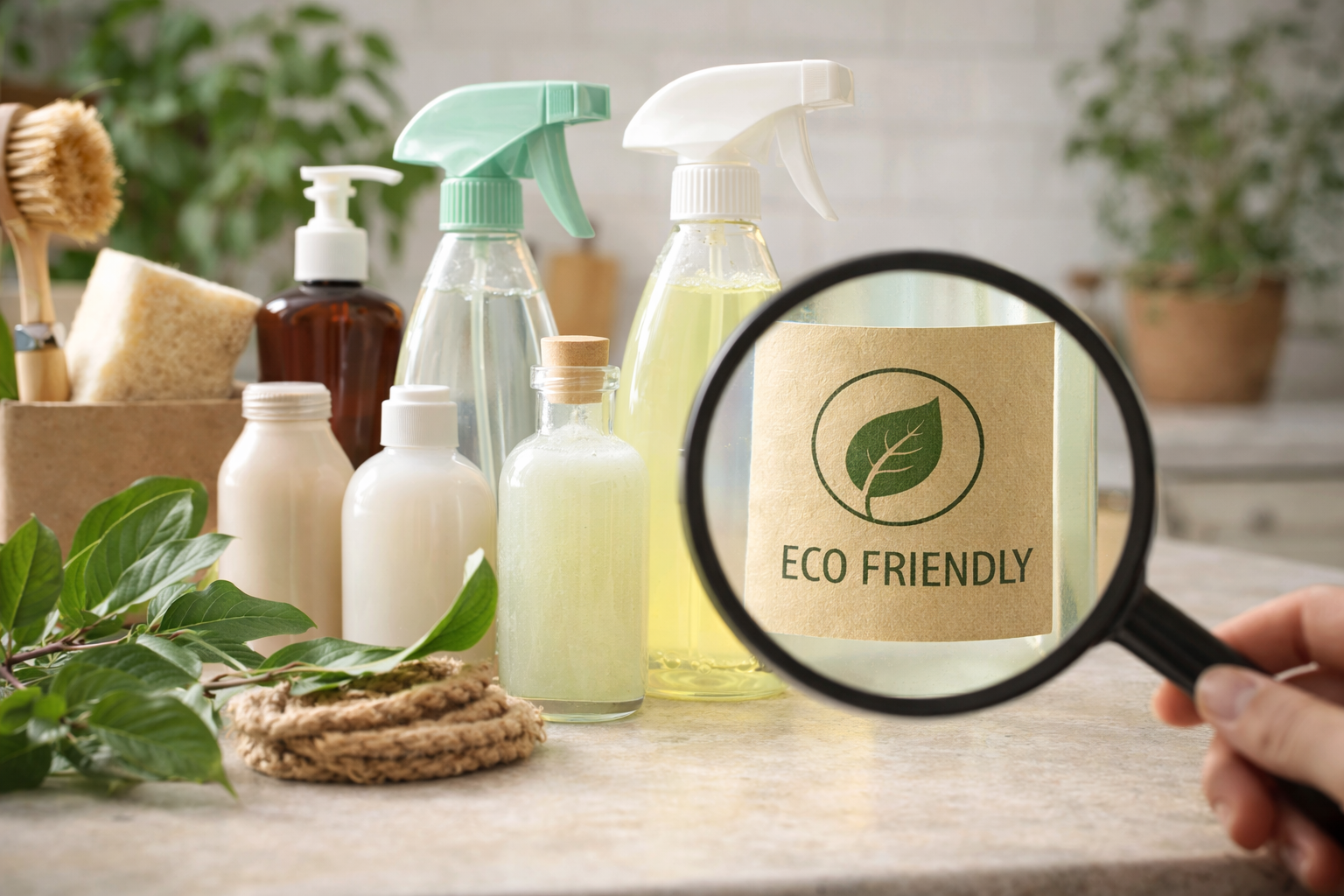
For example, a bottle decorated with leaves and labeled “natural formula” may still contain synthetic chemicals harmful to aquatic life. Without clear standards or definitions, words like “eco,” “green,” or “non-toxic” can be used loosely.
The key to avoiding greenwashing is learning how to look beyond marketing language and examine the substance behind the claims.
Beware of Vague or Undefined Terms
One of the most common greenwashing tactics is the use of broad, undefined words such as:
- “All-natural”
- “Environmentally friendly”
- “Chemical-free”
- “Pure”
- “Plant-based”
Everything is made of chemicals, including water. When a product claims to be “chemical-free,” it signals a marketing tactic rather than a scientific reality. Similarly, “plant-based” does not automatically mean biodegradable or safe for aquatic ecosystems.
If a company does not clearly define what these terms mean or provide supporting information, consider it a red flag.
Look for Recognized Certifications
Reliable third-party certifications provide stronger evidence of environmental responsibility. Unlike self-declared claims, certifications require meeting specific standards.
Some internationally recognized certifications for cleaning products include:
- EcoLabel programs that verify reduced environmental impact
- Green Seal certification for performance and sustainability
- EU Ecolabel, which evaluates life-cycle environmental impact
- Safer Choice (by regulatory authorities in some countries), focusing on safer chemical ingredients
These certifications assess ingredient safety, packaging impact, biodegradability, and manufacturing practices. When evaluating a product, check whether the certification logo is authentic and traceable to an official organization website.
Be cautious of fake or unfamiliar logos that mimic legitimate certification seals.
Examine the Ingredient List
Transparency is one of the strongest indicators of credibility. Companies that openly list ingredients demonstrate accountability.
When reviewing ingredients, consider:
- Biodegradability
- Presence of phosphates or chlorine
- Synthetic fragrances, which may trigger allergies
- Microplastics or persistent surfactants
If the ingredient list is incomplete or hidden behind generic terms like “fragrance blend,” it may indicate a lack of transparency.
Assess Packaging and Lifecycle Impact
Sustainability extends beyond formula ingredients. Packaging plays a significant role in environmental impact.
Questions to ask:
- Is the bottle made from recycled plastic?
- Is it recyclable in your local system?
- Does the brand offer refill options?
- Are concentrated formulas available to reduce packaging and transport emissions?
Refill systems and concentrated cleaners often reduce carbon footprint more effectively than simply labeling a product “green.”
Watch for Irrelevant Claims
Some products highlight attributes that are legally required or unrelated to environmental safety. For example, stating “CFC-free” in a context where CFCs are already banned by law is misleading. Such claims attempt to create a perception of added environmental value where none exists.
Focus on claims that meaningfully distinguish the product rather than repeating baseline regulatory compliance.
Compare Performance and Sustainability
A truly sustainable product must also be effective. If an eco-labeled cleaner requires double the amount to achieve results, its environmental benefit may diminish.
Look for performance testing results, consumer reviews, and transparent data about concentration and usage efficiency. Effective products reduce waste and overuse.
Investigate the Brand’s Broader Practices
Greenwashing often focuses on a single product while ignoring larger corporate behavior. Research the company’s broader sustainability policies:
- Does the company publish environmental impact reports?
- Are manufacturing emissions addressed?
- Are labor and ethical sourcing standards disclosed?
Authentic sustainability efforts usually extend beyond one product line.
Practical Steps for Smart Consumers
To reduce the risk of falling for greenwashing:
- Prioritize certified products over vague marketing claims.
- Read ingredient lists carefully.
- Choose concentrated formulas and refill systems.
- Reduce overall consumption by using multi-purpose cleaners.
- Stay informed about evolving environmental standards.
Small but informed decisions, repeated consistently, have meaningful environmental impact.
Why Awareness Matters
Greenwashing undermines trust and slows environmental progress. When consumers reward misleading marketing, companies have less incentive to invest in genuine sustainability innovation.
By critically evaluating cleaning products, households contribute to a marketplace that values transparency and accountability.
Sustainable cleaning is not about perfection. It is about informed choices that reduce harm while maintaining healthy living spaces. Understanding certifications, ingredient transparency, and lifecycle impact empowers consumers to move beyond marketing language and toward real environmental responsibility.
In the end, the most powerful tool against greenwashing is knowledge — and the willingness to ask better questions before placing a product into your shopping cart.