
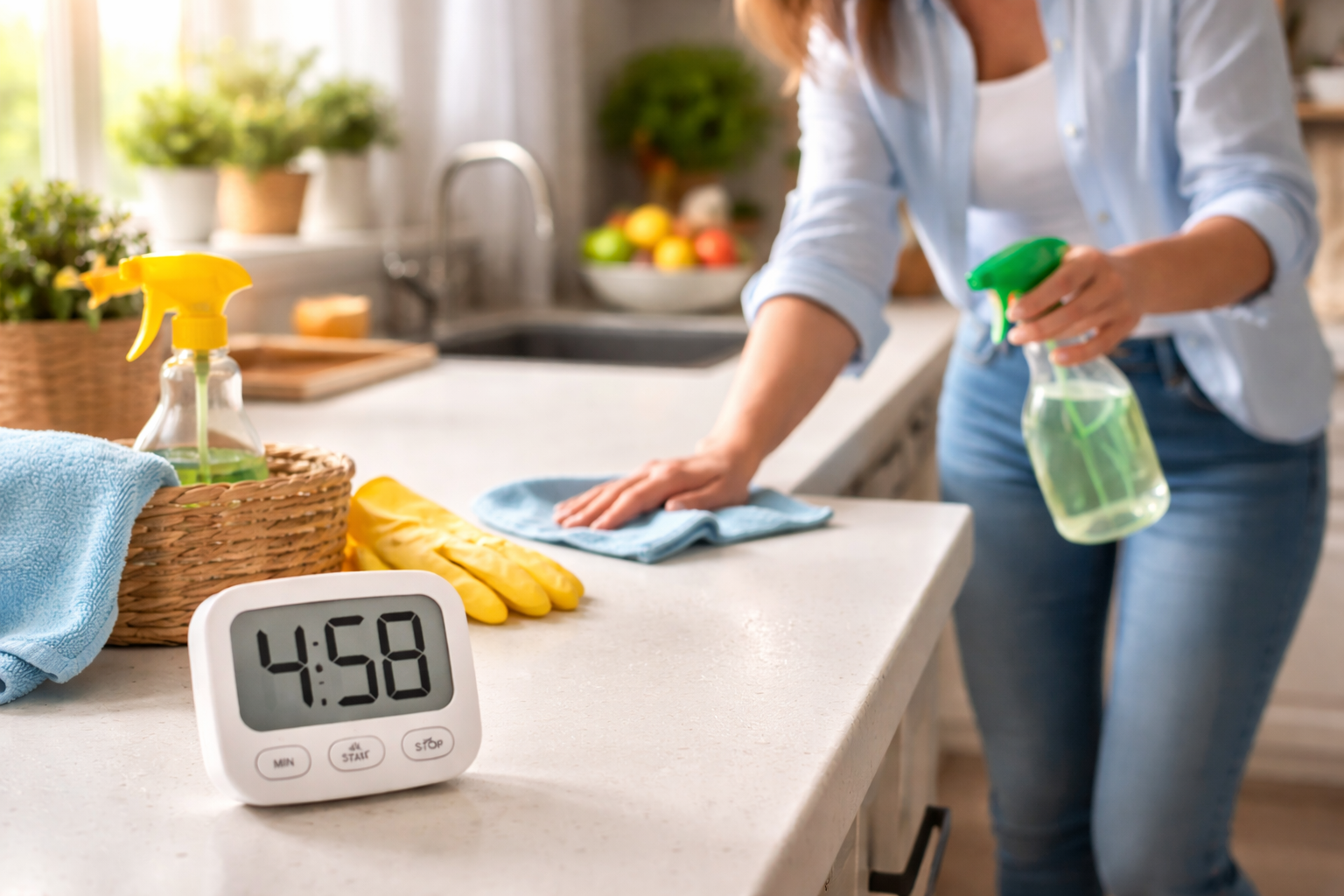
Harnessing Timers: Daily Five-Minute Clean-Ups That Add Up
Modern life often makes cleaning feel overwhelming. Busy schedules, constant digital distractions, and mental fatigue can turn even simple household tasks into sources of stress. As clutter accumulates, so does the sense that cleaning requires a large, uninterrupted block of time. The idea of harnessing timers and committing to daily five-minute clean-ups challenges that assumption and replaces it with a more realistic, sustainable approach to maintaining order.
The foundation of this method is a simple rule: if a task takes under five minutes, do it immediately. This principle shifts the way everyday responsibilities are perceived. Instead of postponing small actions until they grow into larger problems, they are resolved at the moment they appear. Putting a dish into the dishwasher, hanging up a jacket, wiping a counter, or sorting the mail rarely requires more than a few minutes, yet these small actions prevent mess from compounding over time.
Timers play a crucial psychological role in making this habit stick. Setting a five-minute timer creates a clear boundary that removes the fear of endless cleaning. The mind knows the task has a defined beginning and end, which reduces resistance. Five minutes feels manageable even on the most exhausting days, and that sense of limitation often leads to surprising productivity. Once the timer starts, focus sharpens, distractions fade, and movement becomes more intentional.
Daily five-minute clean-ups also benefit from their cumulative effect. While a single short session may seem insignificant, repetition transforms it into a powerful system. Over a week, five minutes a day becomes more than half an hour of maintenance. Over a month, it prevents hours of deep cleaning that would otherwise feel unavoidable. The home stays consistently manageable, not because of intense effort, but because of steady attention.
This approach also reduces decision fatigue. Large cleaning sessions require planning, prioritizing, and negotiating with one’s own motivation. In contrast, the five-minute rule removes choice from the equation. When something small appears, it is handled immediately. There is no debate, no mental bargaining, and no need to remember it later. The action becomes automatic, freeing mental space for more meaningful activities.
Timers help redefine productivity in a healthier way. Instead of measuring success by how much is accomplished in one session, progress is measured by consistency. Even on days when energy is low, completing a five-minute clean-up reinforces a sense of control and accomplishment. This consistency builds trust in one’s own routines, making it easier to maintain habits without relying on bursts of motivation.
The emotional impact of this method is often underestimated. Living in a space that is regularly reset reduces background stress and visual noise. Small acts of order signal care and self-respect, subtly improving mood and focus. Over time, the home becomes a place that supports daily life rather than adding pressure to it.
Harnessing timers and embracing the five-minute rule is not about perfection or spotless rooms. It is about momentum, awareness, and respect for time. By acting immediately on small tasks and using short, focused intervals, cleaning becomes less of a burden and more of a natural rhythm. These brief moments of effort quietly add up, proving that lasting order is built not through dramatic overhauls, but through simple actions repeated every day.