Everything You Need to Know About Ventilation and Air Conditioner Cleaning — Protecting Your Health and Indoor Air Quality
Clean indoor air is often taken for granted. We focus on visible cleanliness — dust-free shelves, spotless floors, organized spaces — yet overlook the invisible systems that circulate the air we breathe every day. Ventilation ducts and air conditioning systems quietly operate behind walls and ceilings, but when neglected, they can become hidden sources of contamination. Proper cleaning and maintenance are not just technical tasks; they are essential steps toward protecting health and maintaining a truly clean living environment.
Why Ventilation and AC Cleaning Matters
Modern homes and apartments are designed to be energy-efficient, which means they are often tightly sealed. While this helps regulate temperature, it also reduces natural air exchange. As a result, indoor air can accumulate:
- Dust and fine particles
- Mold spores
- Pollen and allergens
- Bacteria and microorganisms
- Volatile organic compounds
Ventilation systems and air conditioners continuously circulate this air. If ducts, filters, and internal components are dirty, contaminants are redistributed throughout the space rather than removed.
Clean systems improve air quality, reduce allergy symptoms, and contribute to overall respiratory health.
Health Risks of Poor Maintenance
When ventilation systems are neglected, several issues may arise:
Allergies and Respiratory Irritation
Dust buildup and mold growth inside ducts can trigger sneezing, coughing, headaches, and sinus irritation. Individuals with asthma or allergies are especially vulnerable.
Mold Growth
Moisture from condensation inside air conditioning units creates a favorable environment for mold. Once established, spores can spread through airflow and contaminate rooms.
Bacterial Accumulation
Standing water in poorly maintained drainage trays can promote bacterial growth, leading to unpleasant odors and potential health concerns.
Increased Pollutant Concentration
Without proper filtration and cleaning, harmful particles remain in circulation, increasing long-term exposure.
Maintaining ventilation and cooling systems is therefore directly connected to preventative health care.
Signs That Your System Needs Cleaning
Certain warning signs indicate that cleaning may be overdue:
- Persistent musty or dusty smells when the system runs
- Visible dust around vents
- Uneven airflow or reduced cooling efficiency
- Increased allergy symptoms indoors
- Higher-than-usual energy bills
Ignoring these signs may allow contamination to worsen over time.
What Needs to Be Cleaned
A complete maintenance routine includes several components:
Air Filters
Filters trap dust and particles, preventing them from entering the system. They should be replaced or cleaned regularly, depending on the type and manufacturer recommendations.
Air Ducts
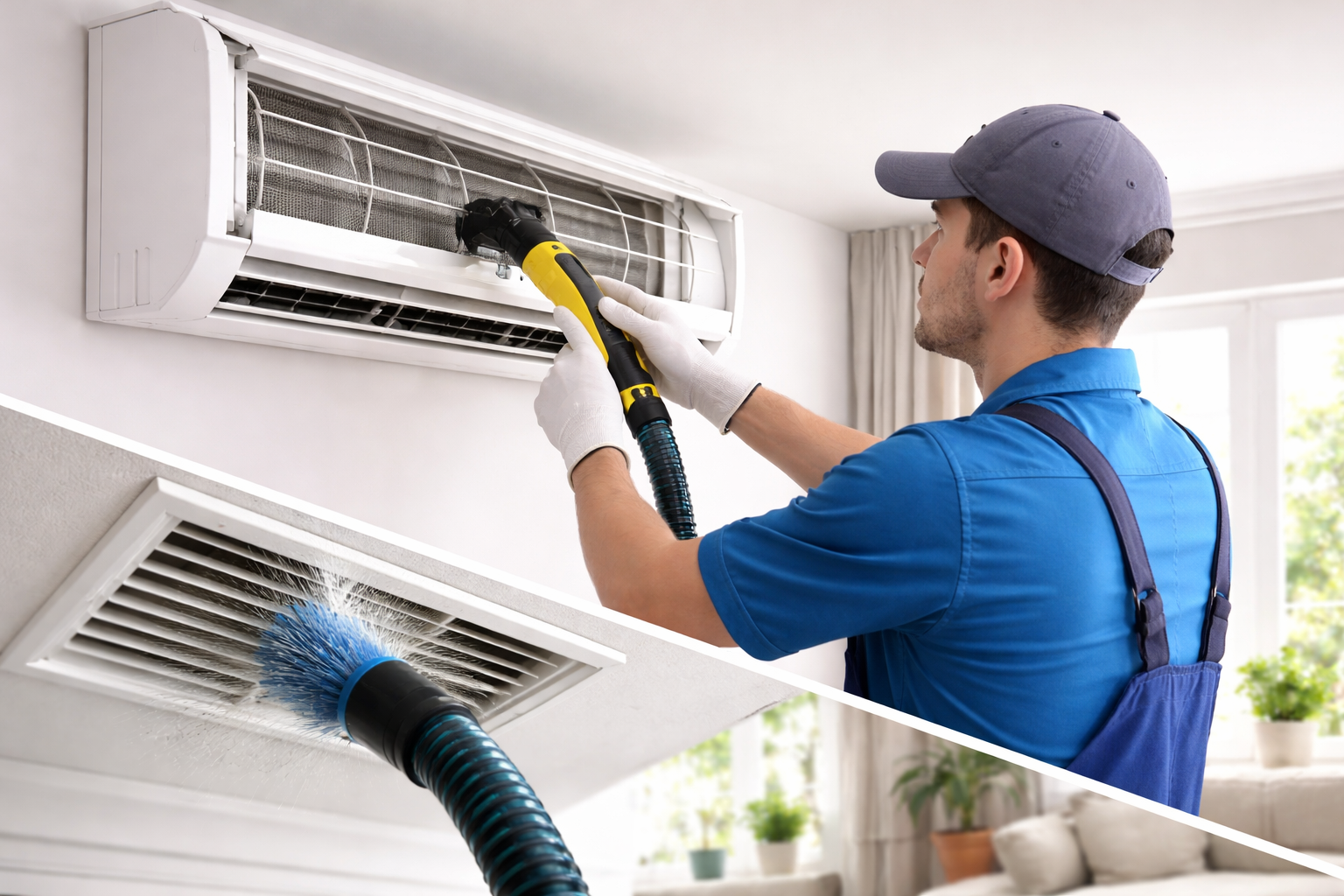
Over time, ducts accumulate dust, debris, and sometimes mold. Professional cleaning may be required if significant buildup is present.
Evaporator and Condenser Coils
These components regulate cooling efficiency. Dirt on coils reduces performance and forces the system to work harder.
Drainage Systems
Air conditioners produce condensation. The drainage pan and line must remain clear to prevent standing water and bacterial growth.
Vents and Grilles
Exterior vents should be wiped and vacuumed to prevent surface dust from entering the system.
Benefits Beyond Health
Cleaning ventilation and air conditioning systems provides additional advantages:
Energy Efficiency
Dirty systems require more energy to operate. Clean components improve airflow and reduce strain, lowering electricity consumption.
Extended Equipment Lifespan
Regular maintenance prevents premature wear, reducing the risk of costly repairs or early replacement.
Improved Comfort
Clean systems distribute air more evenly and maintain consistent temperature control.
Odor Elimination
Removing accumulated dust and moisture eliminates stale or musty smells.
How Often Should Cleaning Be Done?
Frequency depends on several factors:
- Presence of pets
- Local air pollution levels
- Household members with allergies
- Humidity levels
- Frequency of system use
Filters often require replacement every one to three months. Full system inspections are typically recommended annually, particularly before peak cooling or heating seasons.
Professional vs. DIY Maintenance
Basic maintenance such as filter replacement and vent cleaning can be done independently. However, deep duct cleaning, coil maintenance, and mold remediation often require specialized tools and expertise.
Professional technicians can assess hidden areas and ensure that cleaning does not damage delicate components.
Preventative Measures for Cleaner Air
In addition to regular maintenance, several habits support healthier indoor air:
- Keeping windows open when weather permits
- Using high-quality air filters
- Controlling indoor humidity levels
- Cleaning carpets and upholstery regularly
- Avoiding excessive use of indoor chemical sprays
Combining system maintenance with everyday air-conscious habits creates a healthier environment.
Clean Air as a Foundation of Well-Being
We spend a significant portion of our lives indoors. The quality of the air we breathe directly influences sleep quality, concentration, immune function, and long-term respiratory health. Ventilation and air conditioning systems are not merely comfort features — they are part of the infrastructure that supports daily well-being.
By treating these systems with the same attention as other aspects of home maintenance, we reduce health risks, improve energy efficiency, and create living spaces that are genuinely clean — not just visually, but environmentally.
Clean air is invisible, but its impact is profound. Proper ventilation and air conditioner maintenance ensures that what circulates through your home supports health rather than undermines it.