
Living Green, Staying Clean: How Indoor Plant Care Supports a Healthier Home
Indoor plants have long moved beyond decorative accents and become an essential part of modern interiors. They soften spaces, improve air quality, and create a sense of calm and connection with nature. Yet plants are often excluded from regular cleaning routines, even though they actively interact with dust, air particles, and household microclimates. Caring for plants properly is not only about aesthetics or growth, but also about maintaining a healthier, cleaner living environment.
A green interior requires mindful maintenance. Leaves collect dust just like shelves and windowsills, soil can harbor pests if neglected, and stagnant moisture can affect indoor air quality. When approached thoughtfully and without toxic products, plant care becomes a natural extension of home cleanliness rather than a separate chore.
Why Plants Need Regular Cleaning
Every leaf acts as a natural filter, trapping airborne dust, pollen, and microscopic debris. Over time, this buildup reduces the plant’s ability to photosynthesize efficiently, weakening its overall health. Dust-covered leaves also release fewer beneficial compounds into the air, limiting the air-purifying potential that makes indoor plants so valuable.
From a household perspective, dusty plants reintroduce particles into the air whenever windows are opened or air circulates. This creates a cycle where dust never fully settles. Regular leaf cleaning supports both plant vitality and overall indoor hygiene, especially in homes with allergies or pets.
Gentle Leaf Cleaning Without Chemicals
Cleaning plant leaves does not require specialized sprays or harsh solutions. In fact, toxic products can damage delicate leaf surfaces and contaminate indoor air. Simple, non-toxic methods are more effective and safer for both humans and plants.
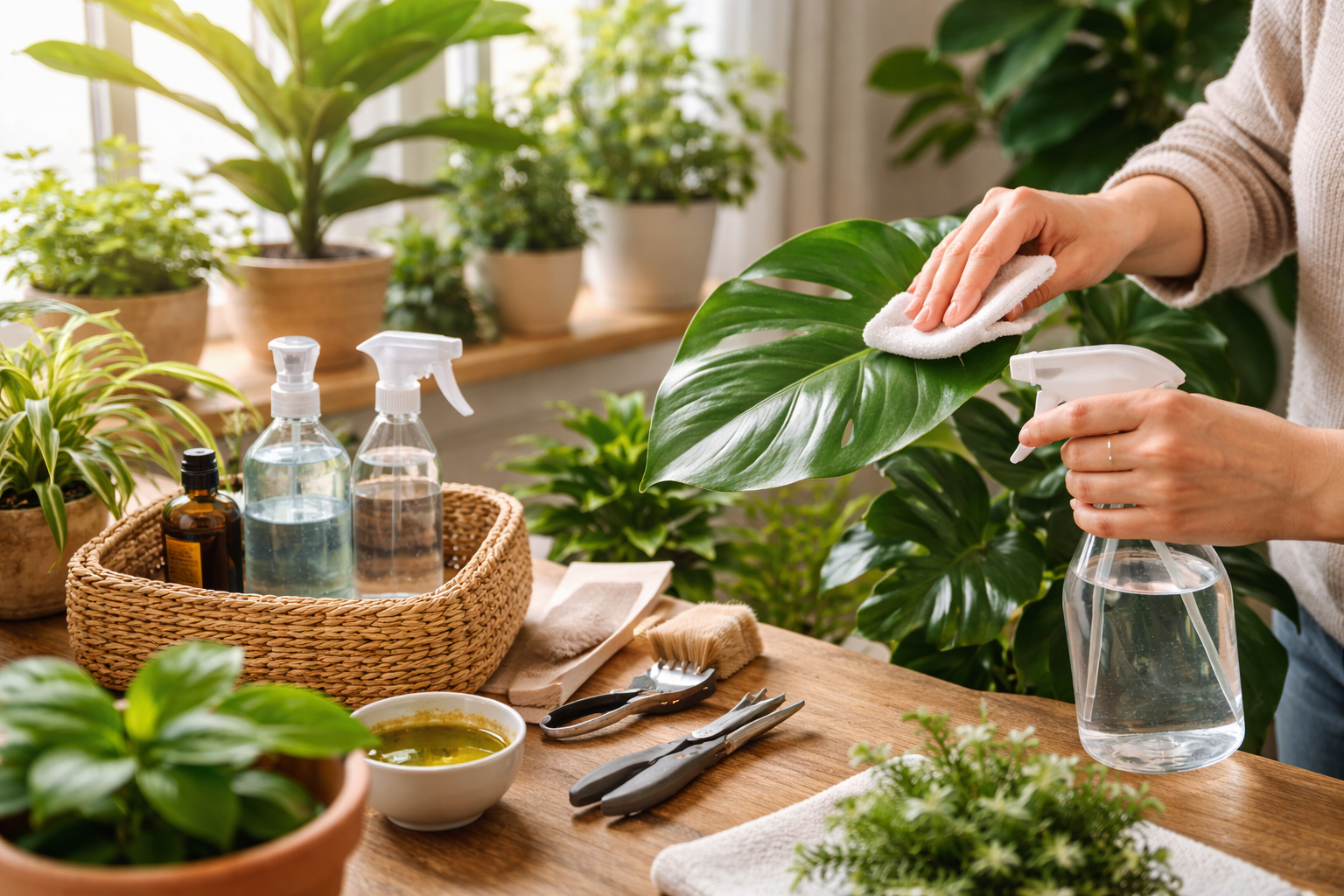
A soft, damp cloth is often enough to remove surface dust from large, smooth leaves. For plants with many small leaves, a gentle lukewarm shower can rinse away debris without stress. This approach mimics natural rainfall and refreshes the plant while cleaning it thoroughly.
Using plain water is usually sufficient. In cases where leaves feel sticky due to natural plant secretions or environmental residue, a very mild solution of water and natural soap can be used sparingly. Any residue should be rinsed off completely to prevent buildup.
Preventing Dust Accumulation in Green Spaces
Prevention is an underrated aspect of plant care. Positioning plants away from heavy airflow, vents, or constantly open windows reduces the amount of dust settling on leaves. Grouping plants together can also create a microclimate with slightly higher humidity, which naturally limits dust adhesion.
Healthy plants with well-hydrated leaves tend to accumulate less dust than stressed plants. Regular watering, appropriate light, and correct pot size all contribute indirectly to cleaner foliage and a cleaner home environment.
Soil Care and Invisible Cleanliness
Soil quality plays a crucial role in plant hygiene. Compacted or overly damp soil can become a breeding ground for fungus gnats and other pests. These insects are not only unpleasant but can spread throughout the home.
Allowing soil to dry appropriately between watering cycles helps prevent infestations naturally. Top layers of soil can occasionally be loosened to improve airflow and discourage mold growth. Using natural soil additives such as sand or small stones on the surface can reduce moisture retention without chemicals.
Replacing old or depleted soil periodically supports plant health and minimizes odor, mold spores, and unseen contamination in the living space.
Natural Pest Prevention Without Toxins
Pests are often the result of imbalance rather than neglect. Weak plants attract insects more easily, making overall plant health the first line of defense. Regular inspection of leaves, stems, and soil allows early detection before pests spread.
Non-toxic prevention methods are both effective and environmentally responsible. Gentle rinsing removes many insects before they establish themselves. Natural solutions based on plant-derived oils or diluted soap can disrupt pests without harming beneficial indoor ecosystems.
Isolation of affected plants is an important hygiene step. Temporarily separating them prevents cross-contamination while allowing treatment without chemical sprays that affect the entire home.
Plants and Indoor Air Quality
A clean plant is an active contributor to better air. Dust-free leaves absorb light more efficiently, release more oxygen, and support humidity balance. This directly influences how clean and fresh a home feels on a daily basis.
In homes where cleaning focuses only on surfaces, the air itself often remains overlooked. Plants bridge this gap by becoming living participants in air purification when properly maintained. Their role is amplified when combined with mindful ventilation and minimal use of synthetic fragrances or cleaners.
Integrating Plant Care into Home Cleaning Routines
Rather than treating plant maintenance as a separate task, integrating it into regular cleaning routines creates consistency. Wiping leaves while dusting furniture or checking soil while watering creates a rhythm that keeps both plants and living spaces in balance.
This integrated approach reduces the need for aggressive cleaning methods and fosters a calmer, healthier home environment. Plants become indicators of indoor cleanliness, reflecting how well the space is cared for as a whole.
A Cleaner Home Through Living Balance
Caring for plants is not just an aesthetic choice but a holistic practice that supports home hygiene, air quality, and emotional well-being. When plants are clean, healthy, and pest-free, they contribute quietly but powerfully to the cleanliness of the entire home.
By choosing non-toxic methods and mindful routines, green interiors transform from decorative elements into active partners in creating a clean, breathable, and harmonious living space.