
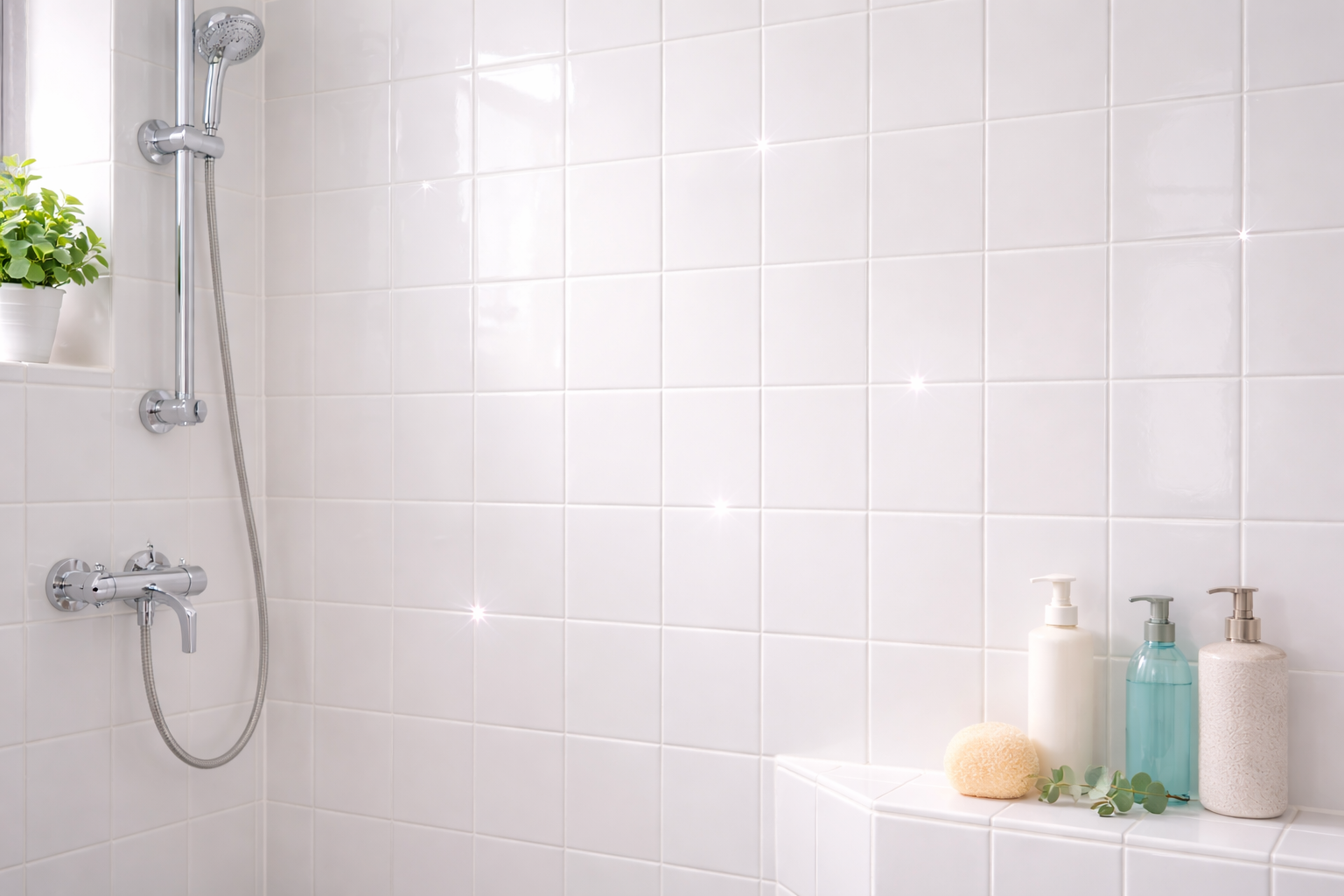
Crystal-Clear Tiles: A Complete Guide to Deep Cleaning Bathroom and Shower Surfaces
Bathroom and shower tiles are designed to withstand moisture, heat, and daily use, yet they are also among the most challenging surfaces to keep clean. Over time, tiles and grout accumulate limescale, soap scum, mold, and stubborn mineral deposits that not only dull their appearance but can also affect hygiene and indoor air quality. Proper tile cleaning is not just about aesthetics; it is about maintaining a healthy, safe, and long-lasting bathroom environment.
Understanding how different contaminants form and how to remove them effectively allows you to clean tiles thoroughly without damaging surfaces or exposing yourself to unnecessary chemicals.
Why Bathroom Tiles Get Dirty So Quickly
Bathrooms create the perfect environment for buildup. Warm water, steam, and limited ventilation encourage mineral deposits and microbial growth. Hard water leaves behind calcium and magnesium residue, forming limescale that clings to tile surfaces and shower doors. Soap scum develops when soap reacts with minerals in water, creating a cloudy, sticky film that traps dirt.
Mold and mildew thrive in damp grout lines, corners, and poorly ventilated areas. These organisms are not only unsightly but may also contribute to respiratory irritation if left unchecked. Over time, neglect allows these problems to layer and harden, making removal more difficult.
Understanding Tile and Grout Materials
Not all tiles are the same, and cleaning methods should reflect this. Ceramic and porcelain tiles are generally durable and resistant to moisture, making them easier to clean. Natural stone tiles, such as marble or travertine, are more porous and sensitive to acidic cleaners, requiring gentler care.
Grout is often the most vulnerable component. Its porous structure absorbs moisture and contaminants, which is why discoloration and mold appear there first. Effective tile cleaning must address both surface tiles and grout lines without compromising their integrity.
Tackling Limescale and Mineral Deposits
Limescale forms gradually as water evaporates and leaves minerals behind. Shower walls, tile edges, and fixtures are common problem areas. Removing these deposits requires dissolving the mineral structure rather than scrubbing aggressively.
Gentle acidic solutions are often effective for breaking down limescale, but they must be used carefully, especially on grout and natural stone. Allowing a cleaning solution time to work is more effective than using force. Consistent maintenance prevents minerals from hardening into stubborn layers.
Regularly drying tile surfaces after showering significantly reduces limescale formation and extends the time between deep cleans.
Removing Soap Scum Without Damaging Surfaces
Soap scum is a combination of soap residue, body oils, and minerals. Unlike simple dirt, it adheres strongly to tiles and creates a dull film. Effective removal requires loosening this layer so it can be wiped away rather than smeared.
Warm water plays a key role in softening soap scum. Cleaning during or shortly after a hot shower can make the process easier, as steam helps open pores in grout and loosen buildup. Non-abrasive tools protect tile finishes while still allowing thorough cleaning.
Avoiding overly harsh abrasives preserves the tile glaze and prevents micro-scratches that can trap future residue.
Dealing with Mold and Mildew Safely
Mold is not just a cosmetic issue; it signals persistent moisture and poor airflow. Grout lines, silicone seals, and corners are especially vulnerable. Addressing mold effectively requires both removal and prevention.
Cleaning mold involves breaking down its structure and eliminating spores. Ventilation is essential during this process to reduce exposure. After removal, ensuring surfaces dry completely helps prevent regrowth. Improving airflow through fans or open windows is one of the most effective long-term solutions.
Regular inspection of grout and seals allows early intervention before mold becomes deeply embedded.
Deep Cleaning Grout Lines
Grout cleaning often determines whether tiles look truly clean. Discolored grout can make even freshly cleaned tiles appear dirty. Because grout absorbs moisture, deep cleaning focuses on drawing out embedded dirt rather than just surface wiping.
Gentle agitation helps lift stains without eroding grout. Allowing cleaning solutions to penetrate before scrubbing improves results and reduces effort. Once clean, grout benefits from being sealed, which reduces future staining and simplifies maintenance.
Sealed grout resists moisture and contaminants, extending the life of both grout and tiles.
Preventive Maintenance for Long-Term Cleanliness
The most effective cleaning strategy is prevention. Small daily or weekly habits significantly reduce buildup. Rinsing tiles after use, wiping down shower walls, and maintaining proper ventilation prevent contaminants from settling and hardening.
Using a squeegee after showers removes excess water and slows mineral accumulation. Keeping humidity levels under control limits mold growth. These habits take minutes but save hours of deep cleaning later.
Health and Environmental Considerations
Tile cleaning should support health rather than compromise it. Overuse of harsh chemicals can irritate skin, lungs, and eyes, especially in enclosed bathroom spaces. Choosing milder cleaning approaches and ensuring good ventilation protects both people and surfaces.
Eco-conscious cleaning practices also reduce chemical runoff into water systems and preserve indoor air quality. Balanced cleaning methods achieve effective results without unnecessary environmental impact.
A Bathroom That Looks and Feels Clean
Clean tiles contribute to more than visual appeal; they create a sense of freshness and comfort in one of the most frequently used spaces in the home. When limescale, mold, and residue are controlled, the bathroom becomes easier to maintain and more pleasant to use.
By understanding the causes of tile buildup and applying thoughtful, consistent cleaning strategies, it is possible to maintain sparkling bathroom and shower surfaces without excessive effort. Clean tiles reflect not only light, but also care for health, longevity, and daily comfort.